Episode 1: Creating Your First Portfolio
Step-by-step guide to creating your first trading portfolio with proper risk parameters, position sizing, and analytics tracking from day one.
Academy Lesson 2 walks you through creating your first trading portfolio — the container that anchors position sizing, risk rules, and every analytics metric downstream. Without a defined portfolio, even good trades produce unreliable statistics.
Why Portfolio Structure Matters More Than Most Traders Think
Most traders jump straight into logging trades without defining the account they belong to. That creates mixed data, inconsistent sizing, and prop compliance gaps.
- Mixed data — Scalps, swings, and paper tests in one bucket distort expectancy.
- Inconsistent sizing — Without fixed starting balance and default risk %, every size becomes discretionary.
- Prop compliance gaps — Funded accounts require static sizing on starting balance.
Defining Your Risk Parameters (The 1% Rule & Beyond)
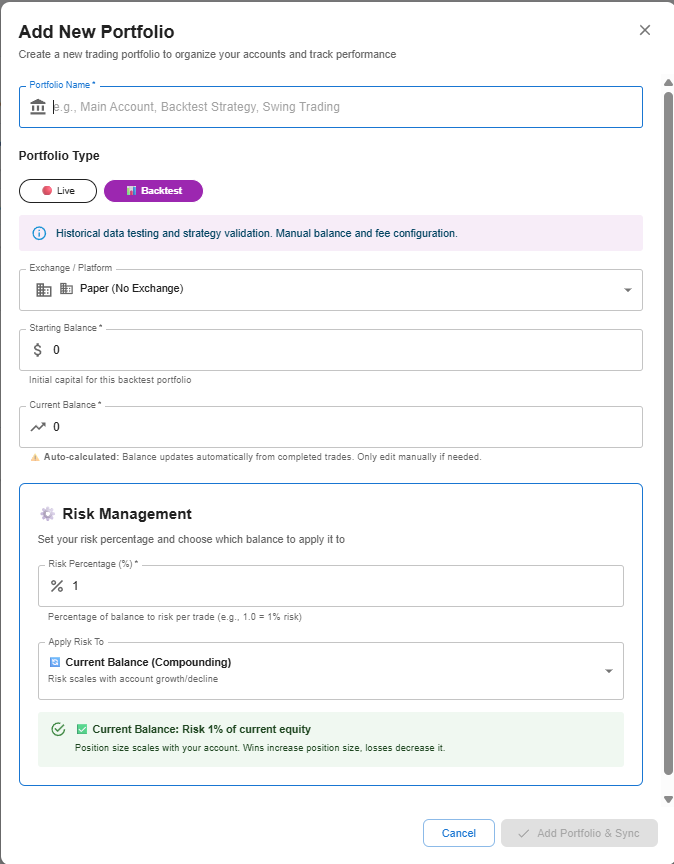
The professional baseline is 1% of account equity per trade. Set default risk % once, choose static (prop-safe) or compounding risk method, and lock starting balance at creation.
Choosing Your Core Markets and Instruments
- Paper — Simulated capital for learning.
- Live — Real brokerage or exchange.
- Backtest — Challenge or historical simulation.
Building Your Initial Position Sizing Framework
Risk dollars = balance × risk %. The Final Tape calculates position size from starting balance, risk %, and stop distance automatically.
Setting Up Tracking and Analytics from Day One
Settings → Portfolio → + Add Portfolio. Enter name, type, exchange, starting balance, risk method, and default risk %.


Common Mistakes When Building Your First Portfolio
- Too many portfolios on day one
- Compounding risk on prop challenges
- Editing starting balance after drawdown
- Mixing paper and live in one portfolio
Your Action Plan: Build Your First Portfolio This Week
FTMO 50k example: $50,000 starting balance, static risk, 1.0% default risk. Save, activate, log one test trade.
Next Steps in the Academy
Lesson 3 covers static vs compounding risk in depth — critical for prop compliance and long-term growth.
Ready to put this into practice?
Run compliance scoring, tag ranking, and Kill List rules on every trade — not once a month when the account feels off.