Traders: Move Break Even Stops with 1R, 60% Rules and an Audit Plan
Use 1R, 60% and structure triggers to move a break even stop. Journal, backtest, and audit first to measure whether the rule truly improves your expectancy.

Traders: Move Break Even Stops with 1R, 60% Rules and an Audit Plan
Move your stop to break-even only when a pre-defined rule tells you to, never as a reflex the moment a trade turns green. Everything below explains the timing, the math, and how to test whether this rule actually helps your results.
TL;DR:
- Moving a stop to break-even should only occur after a predefined rule is triggered, not immediately when a trade turns profitable to avoid premature exits.
- The most effective rule to trigger this move is when the price has covered roughly 60% of the expected reward, ensuring the remaining risk remains favorable.
- Spread, slippage, and market gaps can cause a break-even stop to result in small losses despite appearing flat on the chart.
- Testing the break-even rule on your trade history helps determine if it improves expectancy or simply inflates win rates without increasing profitability.
- Overly early moves to break-even often turn potential winners into scratches, especially in trend-following or swing strategies with larger winning trades.
Table of Contents
- What Is a Break-Even Stop and How Does It Work?
- Advantages and Disadvantages of Moving to Break-Even
- When Should You Move Your Stop to Break-Even?
- How to Implement Break-Even Stops in Live and Automated Trading
- The Math: How Break-Even Stops Change Your Expected Value
- Alternatives and Complements to a Break-Even Stop
- Testing and Journaling Your Break-Even Rule
- Why Most Traders Get Break-Even Stops Backward
- Sources
- FAQ
What Is a Break-Even Stop and How Does It Work?
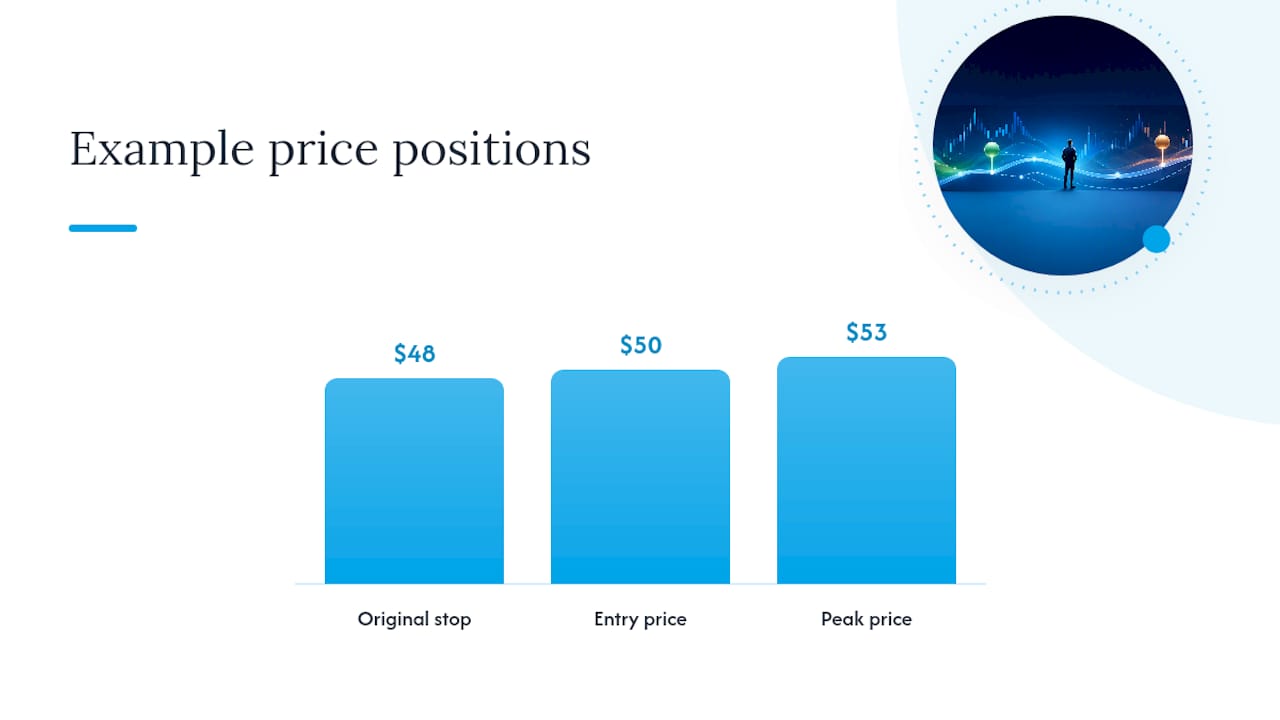
A break-even stop is simply moving your stop loss from its original risk level up to your entry price once a trade shows enough profit. If you bought a stock at $50 and it climbs to $53, dragging the stop from $48 (your original risk) to $50 turns a potential loser into, at worst, a scratch.
The mechanics matter more than most traders realize. You can execute this as a stop-market order (fills at the next available price once triggered) or a stop-limit order (only fills at your exact price or better, but risks not filling at all in a fast market). Most retail brokers default to stop-market for a reason: guaranteed execution beats price precision when you’re trying to protect capital.
Here’s the part that surprises newer traders:
- A break-even stop is not a guarantee of zero loss.
- Prices can gap through your entry during news events or overnight sessions, filling you well below where you expected.
- Spread and slippage mean a “break-even” exit in cash terms often lands slightly negative, not flat.
Advantages and Disadvantages of Moving to Break-Even
The appeal is obvious: once your stop sits at entry, the trade can’t cost you money on paper, and that alone eases the mental load of watching an open position. Traders who move to break-even often report feeling calmer, which frees attention for other setups instead of babysitting one trade.
The cost is just as real. Moving too early routinely turns winning trades into scratches, because price often pulls back to test the exact level where your stop now sits before continuing in your favor.

By the numbers: research on the 60% rule shows that moving to break-even becomes mathematically defensible for many risk/reward setups once price has covered roughly 60% of the distance to target, because the remaining reward-to-risk ratio flips in the trade’s favor at that point.
Quick summary of the trade-off:
- Pros: removes downside risk, reduces stress, frees up capital and attention for new setups.
- Cons: clips winners prematurely, inflates your win rate while quietly hurting expectancy, and can mask a position-sizing problem you should be fixing directly instead.
This trade-off tilts toward “worth it” on short-duration, high-win-rate strategies where individual winners are small and consistent. It tilts against you on trend-following or swing setups where the entire point is letting a handful of large winners pay for a string of small losers.
When Should You Move Your Stop to Break-Even?
Random, reflexive break-even moves are one of the most common ways traders quietly bleed expectancy. The urge usually comes from loss aversion, not analysis, which is exactly why a pre-planned rule matters more than a feeling.
Here are four trigger rules worth testing, roughly in order of how much they respect market structure:
- The 1R rule. Move to break-even once the trade is up by an amount equal to your initial risk. This is one of the more common rule-based approaches, and it’s simple enough to automate.
- The 60% rule. Wait until price has covered 60% of the distance to your target before moving the stop, which keeps the remaining reward-to-risk ratio favorable.
- Structure-based triggers. Move to break-even only after price clears a swing high, a prior resistance level, or another confirmed structural point, not just a raw price move.
- Partial scale-out triggers. Take partial profits at a predefined level, then move the stop on the remainder to break-even, locking in real gains before touching the stop at all.
Whichever rule you pick, build in a break-even-plus buffer. Setting the stop a few pips or ticks beyond raw entry, rather than exactly at it, absorbs typical spread and slippage costs so a “flat” trade doesn’t quietly become a small loss.
Pro Tip: Match your trigger to your timeframe. A 1R rule that works on a 5-minute scalp will often move too early on a multi-day swing trade, where normal volatility can blow through 1R and back several times before the real move starts.
How to Implement Break-Even Stops in Live and Automated Trading
Manual and automated implementation follow the same logic, just with different mechanics.
- Set the initial stop at your calculated risk level the moment you enter the trade.
- Monitor for your trigger condition (1R, structure break, or your chosen rule).
- Move the resting stop order to entry plus your buffer once the trigger fires, rather than just noting it mentally.
- Confirm the order sits with your broker, not just on your screen, so it survives a dropped connection or a platform crash.
- Log the trigger event in your trade journal with the timestamp, price, and rule used.
A few implementation details trip up even experienced traders:
- Manual traders should place the actual modified stop order with the broker immediately, since a mental stop does nothing while you’re away from the screen.
- Algorithmic systems need to persist the “triggered” state to disk or a database, so a restart doesn’t forget that a stop was already moved and accidentally revert to the wider original risk.
- Pseudocode for a simple bot:
if unrealized_pnl >= 1R and not be_triggered: move_stop(entry + buffer); be_triggered = True; save_state().
The Math: How Break-Even Stops Change Your Expected Value
Moving a stop to break-even doesn’t just cap losses. It reshapes your entire distribution of outcomes, converting a chunk of what would have been losing trades into scratches, but also converting some future big winners into scratches too early.
Run the numbers on a simple 2:1 reward-to-risk system.
The real cost hides in the details. Spread, slippage, weekend gaps, and (for options traders) time decay all eat into what looks like a “free” break-even exit on a chart. A stop that reads as flat on your platform can still cost you money once execution friction is included.
- Track gross P&L and net P&L separately for every BE-stopped trade.
- Calculate your BE-out rate: the percentage of trades stopped exactly at break-even.
- Compare expectancy with and without the BE rule active over the same sample of trades.
No formula replaces measurement here. The only reliable way to know if a break-even rule helps or hurts is to test it against your own trade history, not someone else’s backtest.
Alternatives and Complements to a Break-Even Stop
Break-even is a blunt tool, and it’s rarely the only one you should have in the toolbox.
- Trailing stops (ATR-based, percentage-based, or moving-average based) automatically follow price higher in trending markets, giving winners more room to run than a static break-even level ever could.
- Scaling out locks in real, realized profit on part of a position before you even think about moving the remaining stop, which reduces the temptation to move it too early out of anxiety.
- Structure-based trailing stops move the stop up behind each new confirmed swing low or high instead of a fixed distance, anchoring risk management to what the market is actually doing.
- Combination approaches work best for many traders: scale out a third of the position at 1R, trail the remainder behind structure, and only apply a break-even-plus buffer as a floor once price has moved decisively in your favor.
Entry price itself is often a noisy area where price naturally retests before continuing, which is exactly why parking a stop there without a buffer produces so many needless scratch trades.
Testing and Journaling Your Break-Even Rule
You cannot know if a break-even rule helps until you measure it against a real sample of your own trades, split-tested and journaled with discipline.
Start by tagging every BE-managed trade distinctly in your journal, not lumped in with normal winners and losers. Then track four numbers specifically:
- BE-out rate: what percentage of trades get stopped exactly at your break-even level.
- BE opportunity cost: the profit you gave up on trades that would have run further without the early stop move.
- Expectancy shift: whether your average R per trade improved or declined with the rule active.
- Win-rate distortion: because BE rules inflate your win percentage without necessarily improving your bottom line.
A workable testing sequence is backtest first on historical data, forward test on a small live sample, then track results separately once the rule goes fully live. Platforms built for structured trade auditing can automate a lot of this tagging, which matters because manually separating BE-stopped trades from normal exits gets tedious fast across a few hundred trades.
Pro Tip: Review your BE-stopped trades monthly and ask one question: how many would have hit target if the stop had stayed at the original risk level? That single number tells you more about the rule’s real cost than any win-rate statistic.
Why Most Traders Get Break-Even Stops Backward
Most trading content treats break-even stops as a universal best practice, something you should do on every trade the moment it turns profitable. That advice is backward. The data on premature stop-outs is clear: moving too early converts your best trades, the ones that would have paid for five losers, into flat nothings.
Most traders skip that last step entirely. They feel the psychological relief of a “protected” trade and never check whether the rule is actually helping their expectancy or quietly taxing it.
The reflex to move to break-even is loss aversion wearing a risk-management costume. Treat it like any other trading rule: define it before you enter, test it against your own history, and let the numbers, not your nerves, decide whether it stays in your playbook. A structured audit of your trade history, the kind The Final Tape’s multi-agent analysis produces, is one of the more direct ways to see that cost in dollar terms rather than guess at it.
— DigitalPunk
Sources
- Break-Even Stops Explained — Elite Forex Trading
- Breakeven stops: when and how to move them — ProfitLogic
- Should You Move Your Stop to Break Even? The 60% Rule - TrailingStopLoss
- Trailing stop definition — Investopedia
- Break-even stops: protecting realized gains — StaxInvesting
FAQ
What Is the 7% Rule for Stop Loss?
The 7% rule is a position-sizing guideline, popularized in swing-trading circles, that caps your initial stop loss at roughly 7% below your entry price to limit downside on any single trade.
When Should You Move Your Stop to Break-Even?
Moving reflexively the moment a trade turns green tends to cause premature stop-outs on trades that would have run further.
Is a 20% Stop Loss a Good Idea?
Whether it’s appropriate depends entirely on your position size, timeframe, and the asset’s normal volatility. It isn’t a standalone rule most traders should default to.
How Do You Set a Stop Loss at Break-Even?
Once your trigger condition fires, cancel or modify your existing stop order and place a new one at your entry price plus a small buffer to cover spread and slippage. Confirm the order actually rests with your broker rather than existing only as a mental note, since a manual stop you forget to place offers no real protection.
Recommended
Stop reviewing from memory
Run compliance scoring, tag ranking, and Kill List rules on every trade — not once a month when the account feels off.