Episode 4: Entering an Active Trade
Step-by-step guide to entering an Active Trade with structured logging, pre-entry checklist, compliance at submit, and minimum journal fields for long-term edge.
Academy Lesson 5 (Episode 4) covers entering an Active Trade with structured logging — your final pre-execution checkpoint before theory becomes execution.
Why the Entry Moment Is Critical
The Active Trade entry screen enforces discipline before the trade goes live. Rush it or skip fields and R-multiples, compliance, and AI audits become unreliable.
The Minimum Information You Should Log at Entry
Setup, symbol, direction, planned entry/stop/TP, risk % from portfolio default, compliance score at entry, and entry time — the same minimum schema every trade.
Pre-Entry Checklist (Psychology + Setup Validation)
- Correct portfolio active
- Setup matches the pattern you see
- Stop at invalidation price
- Risk % matches default unless tagged override
- Not entering from tilt or FOMO
How to Record Compliance at the Point of Entry
Step 1: setup, symbol, compliance checklist. Step 2: planned prices, risk %, live metrics. Step 3: review and submit as Active.
Common Mistakes Traders Make When Entering Trades
- Post-hoc logging from memory
- Compliance scored after P&L
- Wrong active portfolio
- TP allocations not totaling 100%
How Structured Entry Logging Improves Your Edge
Consistent fields enable setup ranking, compliance filtering, and AI Council audits — not evening storytelling.
How The Final Tape Helps With Trade Entry and Logging
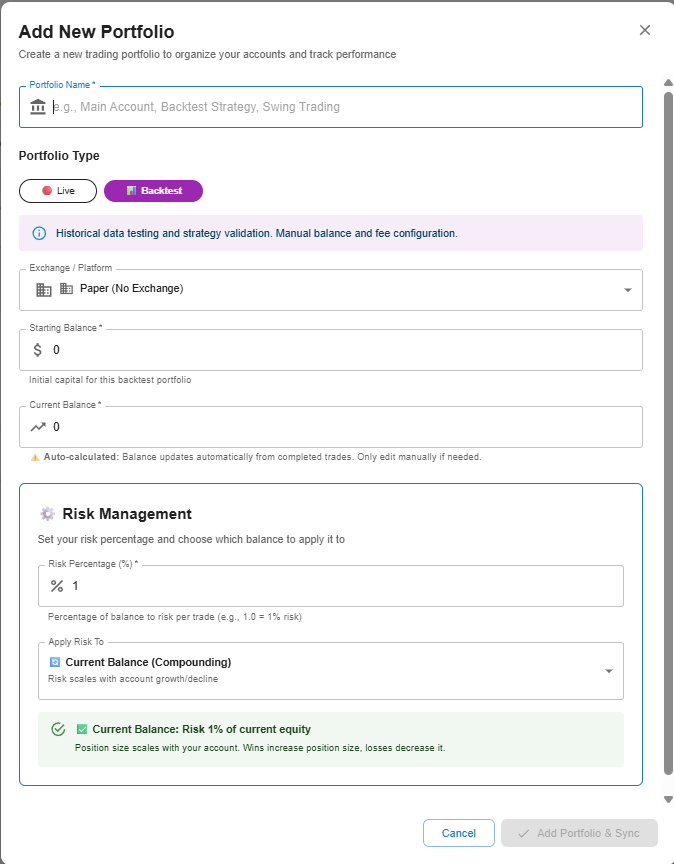
Structured entry logging with locked portfolio settings, live position-size math, and compliance scoring at submit.
Action Plan: Improve Your Next Trade Entry
Log one Active trade with every minimum field. Verify dollar risk. Hold the same schema for seven days.
Next Lesson in the Series
Continue the Academy for pre-trade hidden costs, completed trade autopsies, and compliance engines.
Ready to put this into practice?
Run compliance scoring, tag ranking, and Kill List rules on every trade — not once a month when the account feels off.